
School restrooms are among the hardest-working spaces in any building. Between class changes, lunch breaks, and after-school activities, hundreds of students may pass through a single washroom in the space of minutes, and among them are children with disabilities, temporary injuries, and widely varying heights and abilities. Selecting sinks for these environments means solving two problems at once: moving large numbers of students through quickly, and ensuring that every child, including those who use wheelchairs or walkers, can wash their hands independently. KingKonree's trough and multi-user solutions offer a compelling answer to both challenges, and this article explains how schools can put them to work effectively.
Why Standard Sinks Struggle in School Settings
A row of individual basins, each with its own faucet and drain, creates predictable problems in a school environment. Queues form because only a few students can wash at once, and supervision becomes difficult when children are spread across a long counter. Individual fixtures also multiply maintenance points, since every faucet cartridge and drain assembly is a potential leak or failure. For students with disabilities, standard vanity ADA bathroom sink often fail the clearance test entirely, leaving them dependent on a single accessible stall or, worse, on adult assistance. Schools need fixtures that address throughput, supervision, durability, and accessibility as a single connected problem rather than four separate ones.
The Case for Trough-Style Wash Stations
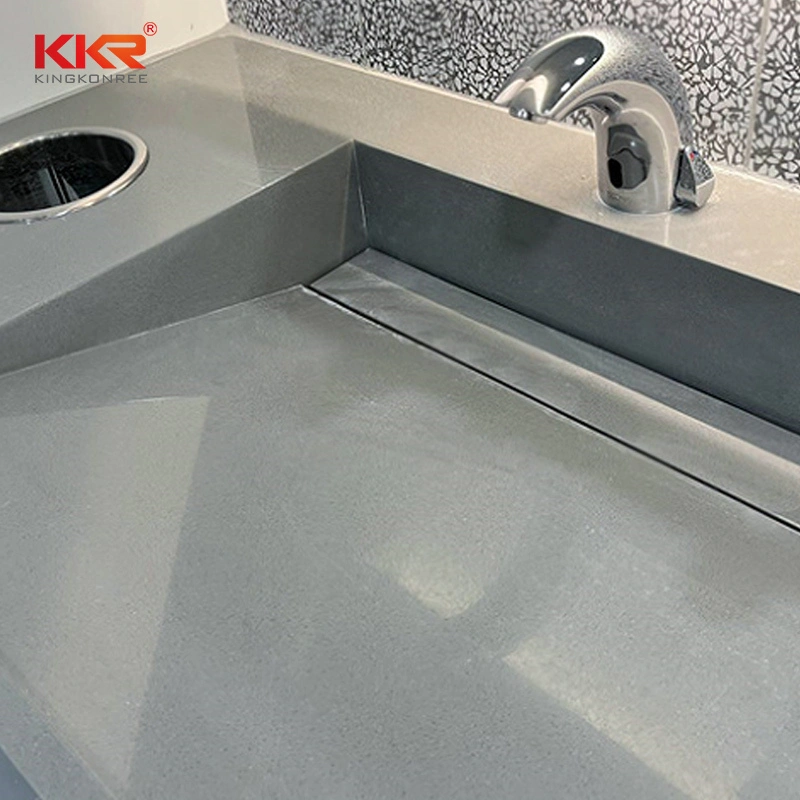
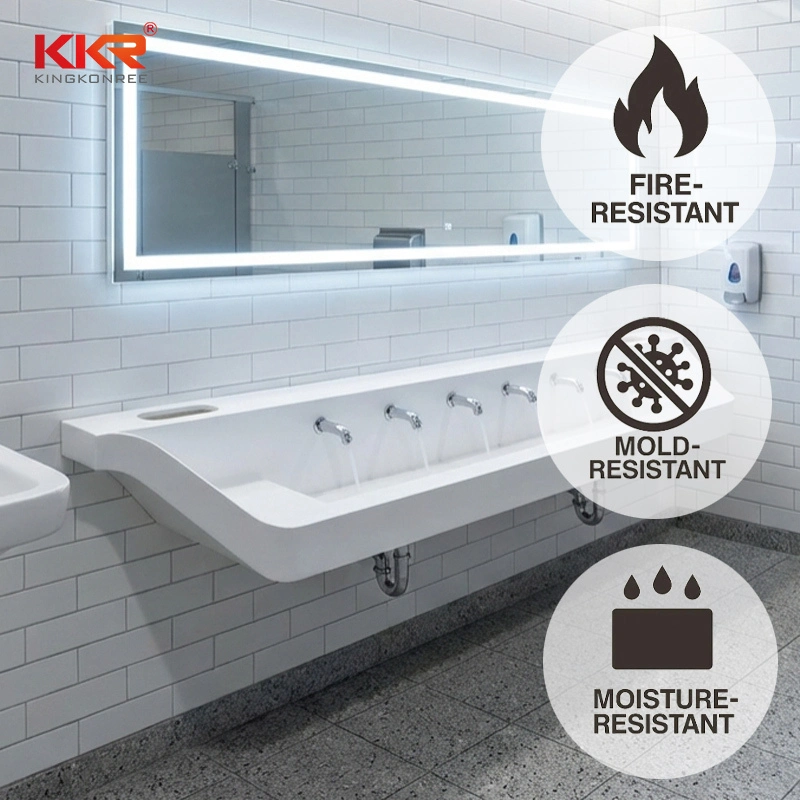
Trough sinks replace the traditional row of basins with a continuous washing channel, allowing several students to use the fixture simultaneously. This design dramatically improves flow during peak periods, since children no longer wait for a specific basin to free up. Teachers and aides can supervise a group from a single vantage point, which matters enormously in primary schools where handwashing is often a guided activity. From a maintenance perspective, fewer faucets and drains mean fewer things to repair, and the smooth continuous surface is quick to clean. For schools grappling with crowded washrooms and limited janitorial time, the trough format offers immediate practical relief.
Designing Multi-User Stations with Accessibility Built In
The real strength of KingKonree's trough and multi-user solutions lies in how they integrate accessibility into high-capacity design. A continuous station can incorporate sections mounted at accessible heights with open space beneath, allowing a student in a wheelchair to pull up alongside peers rather than being separated into a distinct fixture. Shared channels mean no child is singled out by using a different sink, which carries real social value in school settings. Faucet controls can be specified as levers or sensors to suit different age groups and abilities. When accessibility is woven into the multi-user format, inclusion becomes the default experience rather than an exception carved out at the end of the room.
Matching Fixtures to Different Age Groups
A kindergarten and a secondary school have strikingly different requirements, and a single specification rarely serves both well. Younger children need lower mounting heights and controls that are easy for small hands to operate, while teenagers require fixtures that withstand rougher treatment and accommodate rapid turnover. KingKonree's multi-user stations can be configured with varying heights across the run, serving a wide age range within one building. Sensor faucets reduce water waste and contact in older students' washrooms, while lever handles may suit younger children who find sensors confusing. Thinking through the actual users of each washroom, rather than applying one standard throughout a campus, produces far better results.
Durability and Hygiene in Daily School Life
Schools subject fixtures to a level of wear that few other buildings can match. Trough and multi-user stations from KingKonree are constructed from robust materials that resist scratches, stains, and the disinfectants used in daily cleaning. The seamless channel design eliminates the joints and crevices where grime accumulates around individual basins, supporting the hygiene standards schools are expected to maintain. Fewer components also mean fewer failure points, reducing the disruption caused by repairs during term time. For business managers and facilities teams, this combination of easy cleaning and low maintenance translates into real savings and fewer complaints from staff and parents.
Planning Installation Around School Operations
Installing or replacing washroom fixtures in a working school requires careful scheduling, and trough systems offer practical advantages here as well. Because the station is assembled from modular components, installation can often proceed more quickly than fitting multiple individual sinks, reducing the period during which a washroom is out of service. Plumbing can be organized along a single wall run, simplifying the work and minimizing disruption to adjacent areas. KingKonree works with contractors to ensure specifications match the building's existing services, helping schools complete upgrades during holiday windows rather than losing teaching time to extended construction.
Bringing Inclusive Handwashing to Every School
Choosing the right sink for a school is ultimately a decision about what kind of environment children will experience every day. Trough and multi-user solutions from KingKonree show that high capacity and genuine accessibility need not compete; they can reinforce one another. By selecting fixtures that move students efficiently, welcome children with disabilities as equal participants, and survive the realities of school life, administrators can create washrooms that support health, dignity, and inclusion in equal measure. For schools planning new construction or overdue renovations, these solutions deserve a serious place at the top of the specification list.