
In today’s digital marketing landscape, tools don't operate in isolation. The real power emerges when they work together, sharing data and insights to form a complete picture of the customer journey. For years, SEO has often been the odd one out in the martech stack—a vital discipline, but one whose impact was measured in its own silo of rankings and organic traffic. SpotRise’s AI-powered SEO platform breaks down these walls. By integrating seamlessly with your analytics platform and Customer Relationship Management (CRM) system, it transforms SEO from a standalone channel into the intelligent, data-rich engine that drives measurable business growth across the entire organization.
Moving Beyond the SEO Silo
When SEO data lives in a separate dashboard, its business impact remains abstract. You can see keyword movements and traffic spikes, but connecting those gains directly to leads, sales, or customer lifetime value is a manual, often imperfect process. Integrating SpotRise with your core martech stack is the definitive step out of this silo. It’s about wiring seo ai tool intelligence directly into the systems that manage your business outcomes. This connection ensures that every ranking improvement and content optimization effort is automatically evaluated not just for its SEO merit, but for its ultimate contribution to revenue and customer acquisition, making the value of SEO unmistakably clear to every stakeholder.
The Analytics Integration: Closing the Loop on ROI
Connecting SpotRise to analytics platforms like Google Analytics 4 is the first and most critical integration. This creates a closed feedback loop where ranking data meets user behavior and conversion data. Instead of guessing, you can definitively see that moving from position 4 to 3 for a high-intent keyword resulted in a 22% increase in organic conversions for that landing page. SpotRise’s AI can ingest this conversion data to refine its own prioritization model, focusing even more acutely on the technical fixes and content opportunities that drive not just clicks, but commercial outcomes. This integration turns vague "organic growth" goals into precise forecasts for lead generation and revenue tied to specific SEO actions.
Feeding SEO Intent into the CRM Funnel
This is where the integration becomes truly powerful. By connecting SpotRise with your CRM—such as Salesforce or HubSpot—you begin to attach SEO-derived intent directly to individual leads and customers. You can see which commercial keywords a lead searched for before filling out a contact form, or which informational blog guides an existing customer engaged with before upgrading their service. This insight is transformative for sales and account management teams. It provides rich context about a prospect's needs and position in the buying journey the moment they enter the funnel, enabling highly personalized and timely engagement that dramatically improves conversion rates.
Enabling Hyper-Targeted Content and Campaigns
With a unified view of SEO performance and customer data, your content and campaign strategies reach new levels of precision. Your marketing team can use SpotRise to identify high-intent keyword clusters that are currently underperforming. They can then cross-reference this in the CRM to see the exact profile of customers who did convert from similar terms. This allows for the creation of hyper-targeted content, email nurtures, or retargeting campaigns designed to mirror the successful journey. You're no longer creating content for a faceless "audience"; you're creating it for the documented, proven persona that your CRM already knows how to sell to, dramatically increasing relevance and effectiveness.
Aligning Sales and SEO with Shared Data
One of the most common organizational friction points is the disconnect between marketing efforts and sales reality. Integrating SpotRise with the CRM bridges this gap. Sales teams gain visibility into the organic search terms driving the highest-quality leads, allowing them to provide direct feedback to the SEO team on market trends and customer language. Conversely, the SEO team can report on which pieces of content or which keyword groups are most effective at attracting leads that progress to late-stage opportunities. This shared data model fosters collaboration, ensuring both teams are aligned on targeting the most valuable commercial opportunities, with SEO directly fueling the sales pipeline.
Building a Self-Learning Growth System
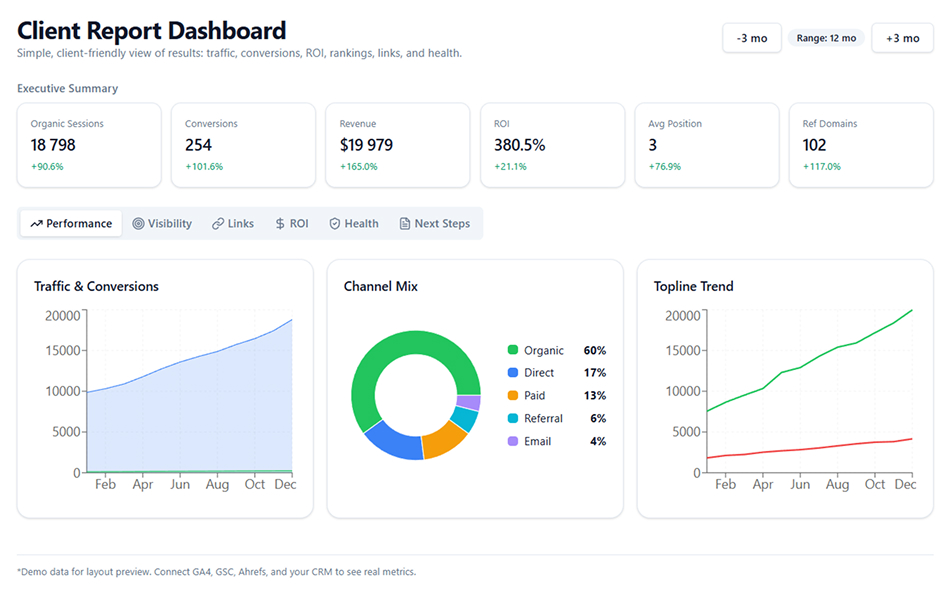
Ultimately, the integration of SpotRise within your martech stack creates more than efficiency; it creates a self-learning growth system. The AI doesn't just optimize for search engines; it begins to optimize for your unique business funnel. It can learn that certain types of technical content drive top-of-funnel awareness, while specific product comparison pages drive bottom-funnel conversions. It can then prioritize recommendations to strengthen each part of the funnel strategically. The data flows both ways: SEO efforts improve lead quality for the CRM, and CRM outcome data sharpens the focus of SEO efforts. This virtuous cycle ensures your organic channel becomes increasingly intelligent and effective over time.
The Integrated Martech Stack as a Competitive Moat
In a competitive market, efficiency and insight are key differentiators. A martech stack where SpotRise’s SEO AI is deeply integrated with analytics and CRM becomes a significant competitive moat. It allows for faster, more confident decisions based on a complete view of the customer journey—from first search to final sale. It ensures marketing resources are allocated to the highest-impact SEO activities, and it empowers sales with unparalleled prospect insight. By breaking down data barriers, you're not just using a better SEO tool; you're building a more intelligent, responsive, and ultimately more profitable marketing engine, where every part of the system works in concert to drive sustainable growth.