
Two stations can offer the same comfortable washing experience and still suit completely different rooms. That is the situation facing anyone choosing between a wall-mounted and a floor-standing Wudu wash station. Both formats are available from KingKonree, both use the same solid surface construction, and both support seated ablution with contained water flow. The decision therefore comes down to the space itself: its dimensions, its plumbing, its floor, and the way people move through it. Understanding what each format demands and delivers makes the choice considerably clearer.
How the Two Formats Differ Structurally
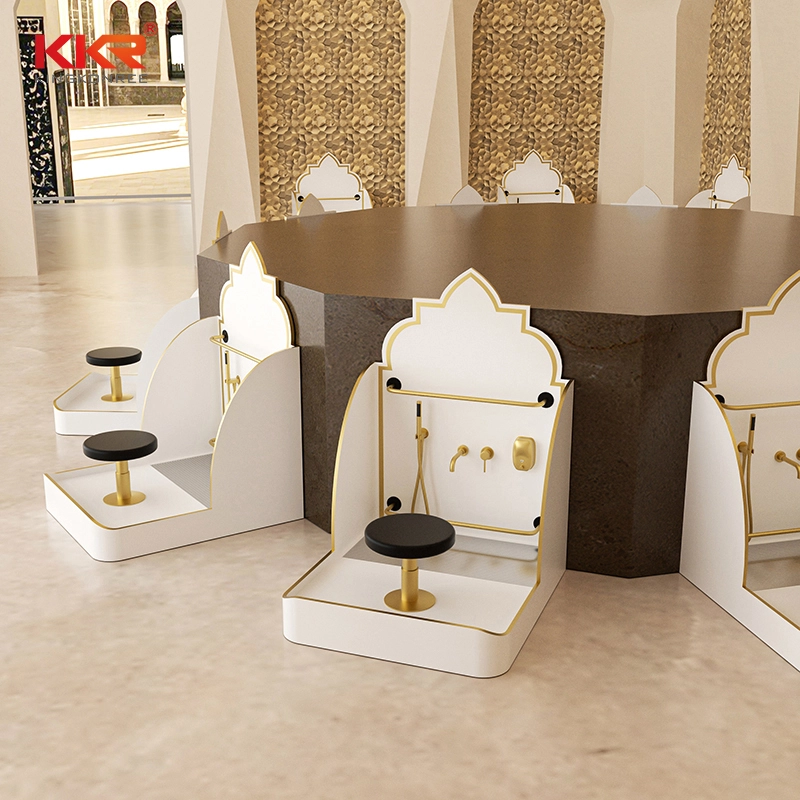
A wall-mounted station is fixed to the wall and supported by it, often with concealed brackets carrying the weight of the platform and basin. Its underside is open, which keeps the floor beneath visible and makes cleaning straightforward. A floor-standing station rests on its own base, distributing weight through the floor and typically incorporating a pedestal or full cabinet beneath the washing surface. This distinction shapes everything that follows, from installation requirements to how spacious the room feels. Neither format is inherently superior; each solves a different set of problems.
When Wall-Mounted Units Make the Most Sense
Wall-mounted stations shine in compact rooms where floor area is precious. Because the unit projects from the wall rather than occupying a footprint, the floor beneath remains open, and the room reads as larger than it is. Cleaning staff appreciate this too, since there are no pedestal edges to work around and mopping is uninterrupted. Wall-mounted designs suit small office washrooms, modest mosque ablution areas, and retrofit projects where the existing drain sits close to the wall. They also allow wheelchair users to approach more closely in some configurations, since there is no base obstructing the space below.
The Case for Floor-Standing Stations
Floor-standing stations bring their own advantages. The integrated base can house plumbing connections and provide a solid, self-supporting structure that does not rely on wall strength. In buildings with lightweight partition walls, this independence matters, since a wall-mounted unit may require reinforcement before installation. Floor-standing models also tend to feel more substantial and can incorporate greater privacy through their cabinet design. In large ablution halls, banks of floor-standing units create a consistent, orderly appearance, and their weight keeps them stable under heavy use without stressing the building's walls.
Assessing Wall Strength and Plumbing Routes
The structural question deserves early attention. A wall-mounted station transfers its load, and the load of the person using it, into the wall, so the wall must be capable of carrying it. Solid masonry is generally straightforward, while stud partitions may need additional support installed during the project. Floor-standing units bypass this concern but require a level, sound floor and a suitable route for drainage through or beneath the base. Plumbing routes differ as well: wall-mounted units often connect behind the fixture, while floor-standing models may connect through the floor. Your contractor should confirm which arrangement your building supports before the order is placed.
Space Perception and Room Layout
Beyond raw dimensions, the two formats affect how a room feels and how people move through it. A wall-mounted station leaves visual floor space open, which helps narrow rooms feel less cramped and makes circulation easier during busy periods. A floor-standing station occupies its footprint permanently, which can be helpful in defining the ablution zone within a larger room but may crowd a tight space. Consider the queue: worshippers waiting their turn need somewhere to stand that does not block the door or the drying area. Sketching the layout with each format in place quickly reveals which one allows a comfortable flow.
Maintenance and Long-Term Practicalities
Both formats are built from the same durable solid surface, so material performance is comparable. The difference lies in maintenance access. Wall-mounted units expose their undersides, making leaks or loose connections easier to spot and reach. Floor-standing units conceal plumbing within the base, which looks tidier but may require panel removal for servicing. Cleaning routines differ slightly, with the open floor beneath a wall-mounted station simplifying mopping. Facilities teams should consider who will maintain the station and how easily they can access its connections over the years.
Matching the Format to Your Building's Character
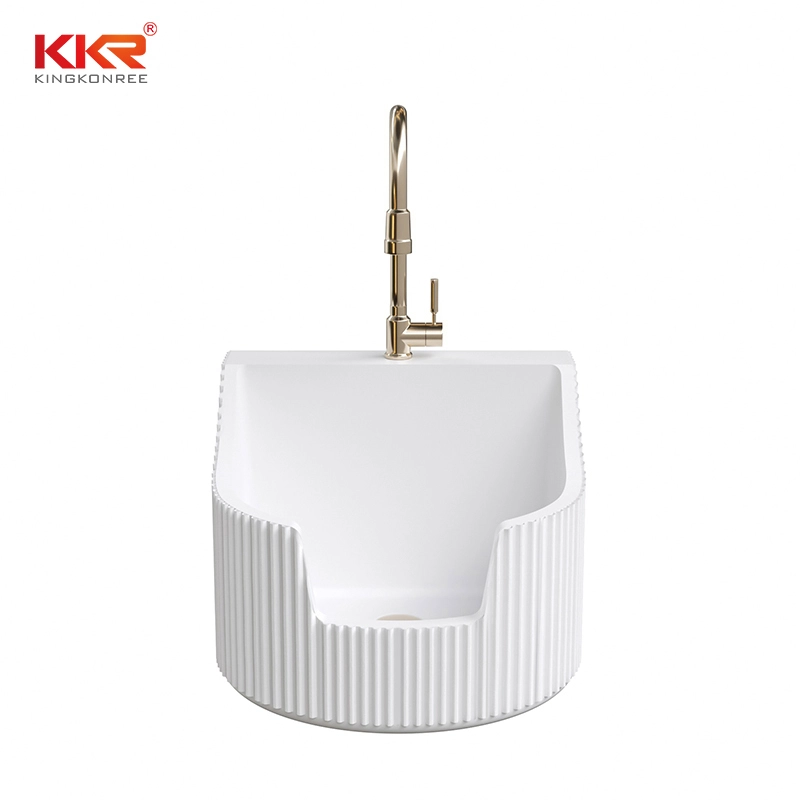
Finally, consider the character of the building and its users. A heritage mosque with thick masonry walls may suit wall-mounted units that preserve floor space and respect the architecture. A modern commercial washroom with raised flooring may favour floor-standing units with underfloor drainage. A home bathroom conversion might accept either, depending on the available wall and the desired look. KingKonree supplies both formats in matching finishes, so the decision can be made on practical grounds without compromising the visual coherence of the room.
Conclusion
Choosing between a wall-mounted and a floor-standing wudu wash station is not a question of quality but of fit. Wall-mounted units conserve floor space and simplify cleaning, while floor-standing units offer structural independence and a more substantial presence. Assess your walls, your plumbing routes, your room dimensions, and your maintenance arrangements, and the right format will become apparent. KingKonree's range covers both options in durable solid surface, so whichever you choose, the station itself will perform to the same high standard.